Oct 9, 2026Cosmetic & Beauty Packaging Guide
Skincare Pouch vs Bottle: Which Packaging Wins?
Compare skincare pouches and bottles for cost, shipping, product protection, dispensing, sustainability and refill applications to choose suitable packaging for your brand.
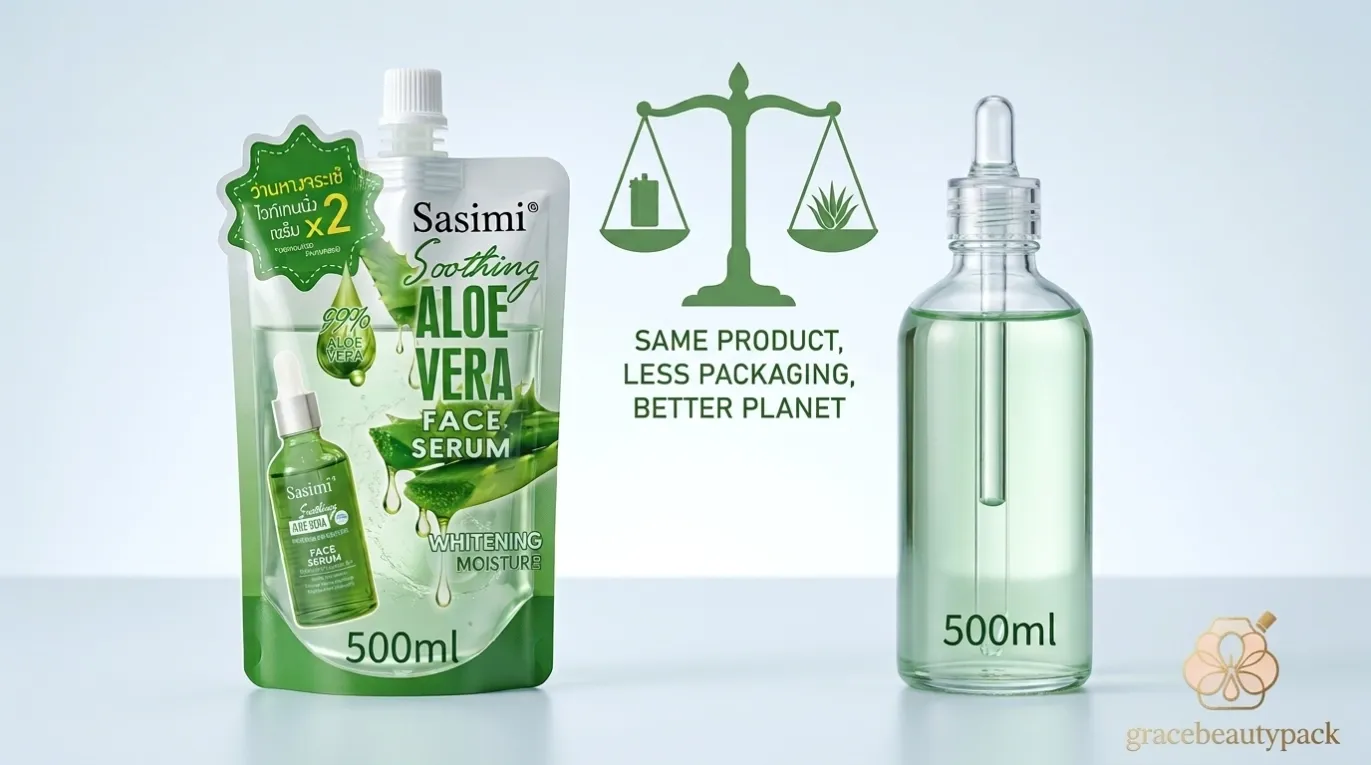
Skincare Pouch vs. Bottle: Cost, Protection & Refill Packaging
Choosing between a skincare pouch and a bottle depends on your formula, filling volume, shelf-life requirements, dispensing method and target customers. Bottles remain popular for primary skincare packaging, while flexible pouches can offer practical options for refill products, travel-size formats and selected liquid or semi-liquid formulations.
For brands comparing flexible packaging with rigid containers, explore our Cosmetic Spout Pouch solutions.
1. Skincare Pouch vs. Bottle: What Are the Main Differences?
Both formats have advantages, and the best choice depends on how the product will be filled, stored, transported and used.
Comparison | Skincare Pouch | Skincare Bottle |
|---|---|---|
Packaging weight | Can be lightweight, depending on construction | Depends on bottle material and design |
Shipping and storage | Flexible format may reduce empty-packaging volume | Rigid shape can require more storage space |
Dispensing | Spout, cap or other suitable closure | Flip-top, screw cap, pump or other closure |
Refill applications | Often suitable for refill-oriented designs | Can serve as the reusable container being refilled |
Shelf presentation | Flexible printing and pouch shapes | Familiar rigid appearance and stable shelf display |
Product protection | Depends on film structure, seals and closure | Depends on bottle material, closure and package design |
This comparison is a starting point, not a guarantee of performance. The finished package must meet the requirements of the actual skincare formula.
2. Cost and Shipping: Which Format Is More Efficient?
Flexible pouches can use less packaging material and occupy less space than some rigid containers. These characteristics may help brands improve carton utilization, storage efficiency and transportation costs.
When comparing the total cost of a pouch and a bottle, consider:
- Packaging material and component costs
- Printing and customization costs
- Filling equipment and production requirements
- Packaging dimensions and carton configuration
- Storage and transportation expenses
- Expected order quantity and repeat-order requirements
A pouch is not automatically cheaper in every situation. The total cost depends on the selected material structure, spout and cap, production method, filling process and shipping arrangement.
For a meaningful comparison, request quotations for both formats using the same filling volume and comparable product requirements.
3. Product Protection and Shelf Life
Product protection depends on the complete packaging system, not simply on whether the package is flexible or rigid.
Skincare products may need protection against oxygen, moisture, light or other environmental factors. The appropriate packaging should be selected according to the formula, expected shelf life, storage conditions and filling process.
Potential pouch material options include PET/PE laminates, aluminum-barrier laminates and other customized multilayer structures. EVOH-containing structures may also be considered for certain applications.
The right construction must be confirmed through technical evaluation and compatibility testing. Seal integrity, spout attachment and closure performance are also important for pouch packaging.
For products with specialized barrier requirements, explore our Functional & Specialty Spout Pouch solutions.
Before bulk production, test the finished packaging with the actual skincare formula under appropriate conditions.
4. User Experience: Bottle or Spout Pouch?
Bottles are familiar to consumers and can work well for products displayed on bathroom counters, vanity tables or retail shelves. Pump bottles may also be suitable when controlled dispensing is important.
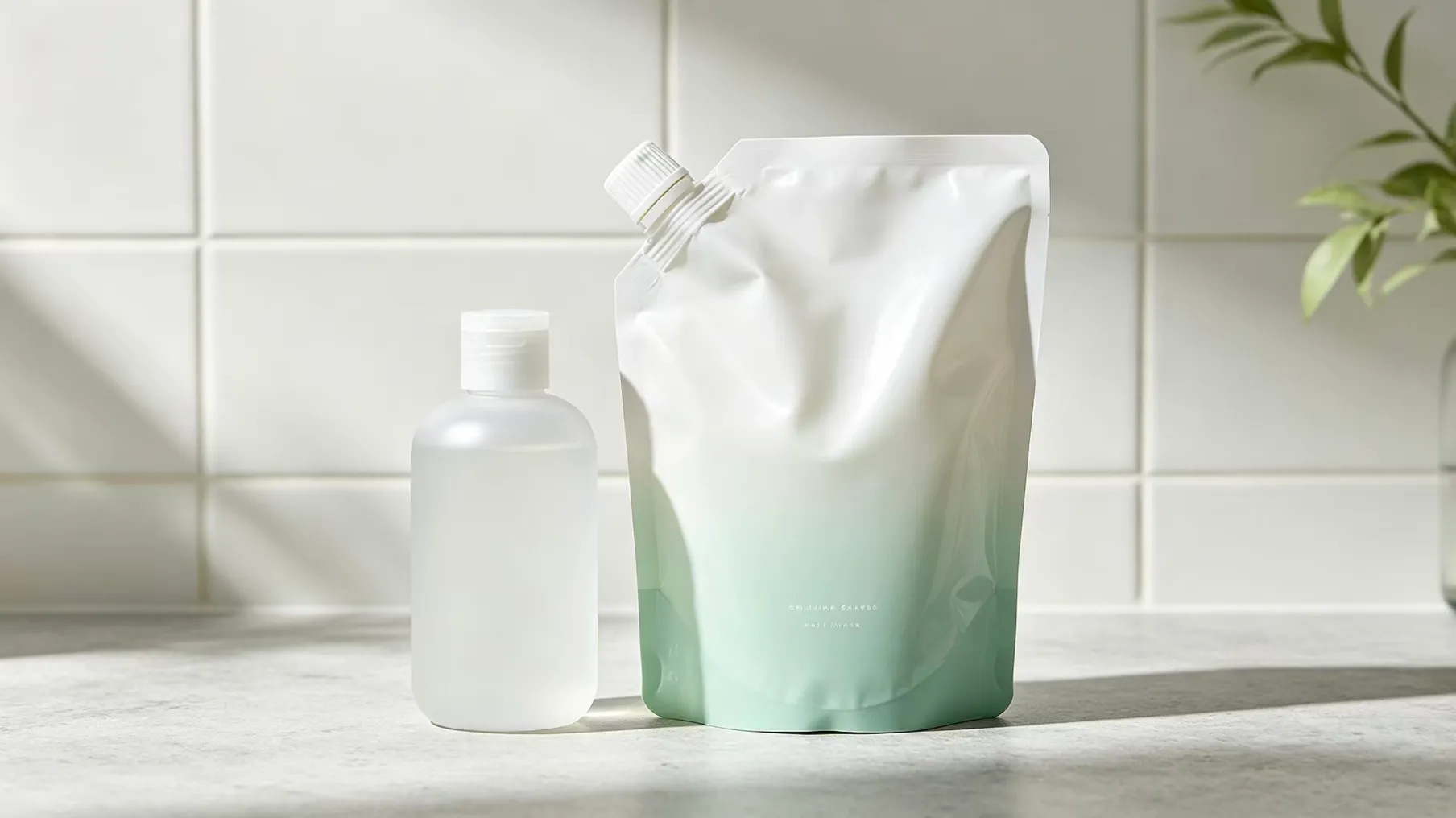
Spout pouches offer a flexible format for products that can be squeezed or poured through a suitable opening. They may be considered for refill products, travel formats and selected liquid or semi-liquid skincare products.
When evaluating a spout pouch, consider:
- Formula viscosity and ease of dispensing
- Required opening size and spout design
- Cap compatibility and closure performance
- Filling volume and package dimensions
- Ease of handling and storage
- Consumer expectations for the product category
The dispensing system should be tested with the actual formula. A spout suitable for a thin toner may not be appropriate for a thicker lotion or cream.
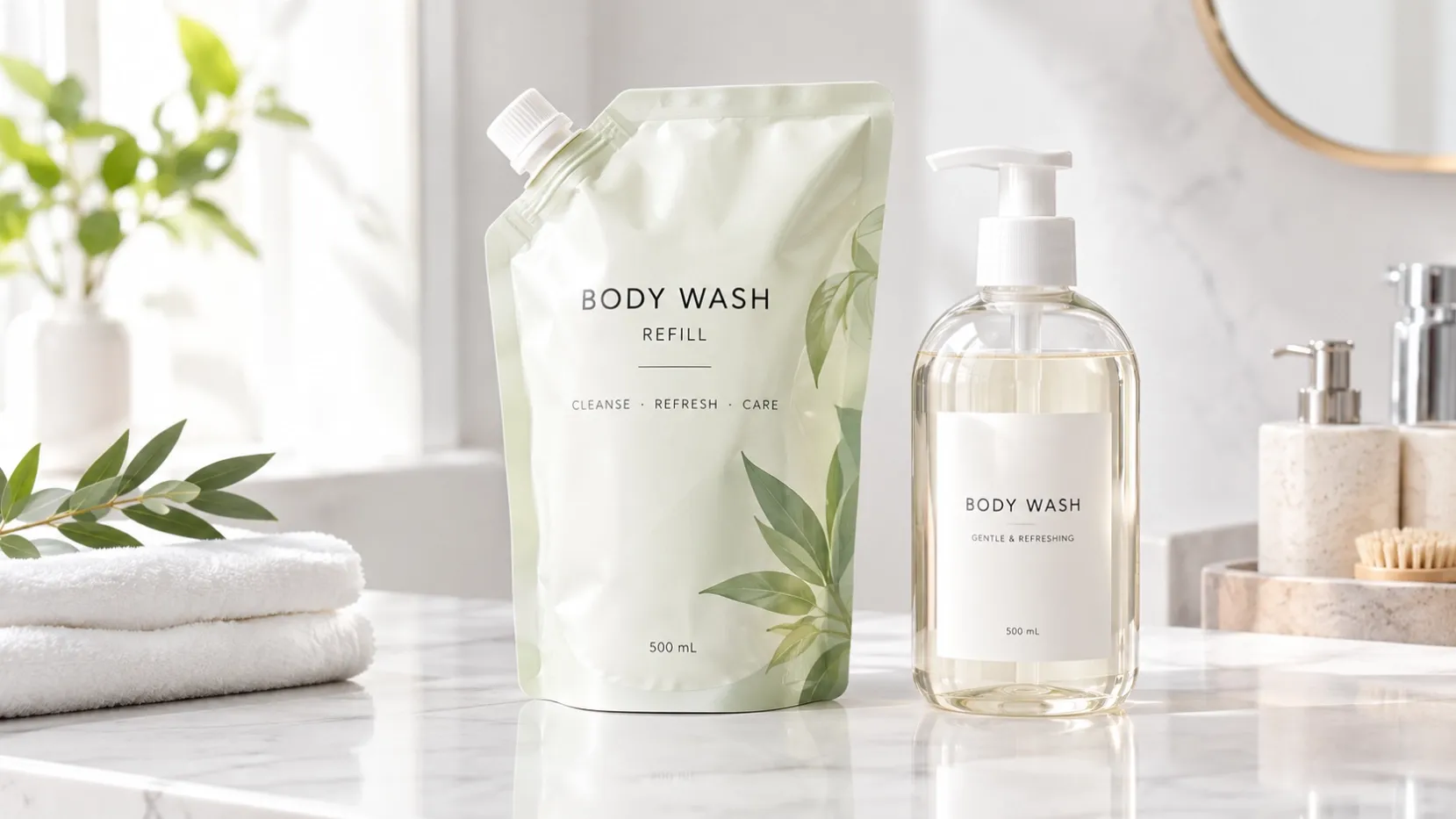
For skincare refill applications, explore our Custom Skincare Refill Spout Pouch, which can be customized according to product and packaging requirements.
5. Sustainability and Packaging Waste
A flexible pouch may reduce packaging material compared with some rigid containers, but the actual environmental impact depends on the complete packaging design and its end-of-life options.
Brands evaluating packaging alternatives should compare:
- Total packaging weight
- Material composition and number of layers
- Recycled content, where applicable
- Recyclability in the intended market
- Transportation and distribution efficiency
- Local collection and recycling infrastructure
Mono-material structures may be worth evaluating when recyclability is a priority. However, their suitability depends on the specific design, required product protection and recycling systems available in the target market.
Avoid assuming that every pouch is more sustainable than every bottle. Compare the actual packaging options against the brand's product and environmental objectives.
6. When Should You Choose a Skincare Pouch?
A pouch may be worth considering when your packaging priorities include:
- Refill-oriented skincare products
- Lightweight and flexible packaging
- Travel-size or selected sample formats
- Custom pouch shapes and printed branding
- Efficient storage and shipping
- A dispensing format suited to the formula
A bottle may remain preferable when the product requires a rigid structure, a particular pump mechanism, a familiar premium presentation or a specific consumer experience.
Some brands may also use both formats: a bottle for the primary retail product and a pouch for a compatible refill product. The suitability of this approach depends on the formula, filling process and product-use requirements.
7. What Should You Confirm Before Choosing a Package?
Before selecting a pouch or bottle for your skincare product, prepare the following information:
- Product type: toner, serum, lotion, cleanser, cream or another formulation.
- Filling volume: the required net contents and package dimensions.
- Formula properties: viscosity and compatibility requirements.
- Product protection: barrier and shelf-life requirements.
- Dispensing method: pump, opening, spout or cap requirements.
- Production process: filling equipment and sealing requirements.
- Order quantity: estimated initial order and future demand.
- Target market: labeling, packaging and end-of-life requirements.
These details help packaging suppliers evaluate the available options and provide a more relevant quotation.
Which Is Better for Your Skincare Brand?
There is no universal winner between a skincare pouch and a bottle. The right option depends on your product formula, filling volume, protection requirements, dispensing method, customer experience and total packaging cost.
Grace Beauty Pack provides custom skincare spout pouches with customizable materials, sizes, spouts, caps and printing for suitable skincare and personal care applications.
Request a Custom Skincare Pouch Quote and share your product type, filling volume, formula requirements and estimated order quantity so we can evaluate suitable packaging options.